
The word “NGO” is thrown around a lot—on news channels, social media, and even everyday conversations. But what does it actually mean? And what does it really do?
From helping children go to school to responding to natural disasters, NGOs are woven deeply into the fabric of our society. Yet, so many myths surround them—clouding the incredible work being done on the ground. 💛
Today, let’s clear the air and bust some of the most common myths about NGOs—truthfully, simply, and respectfully. 🙌🏼
🧩 First Things First: What is an NGO?
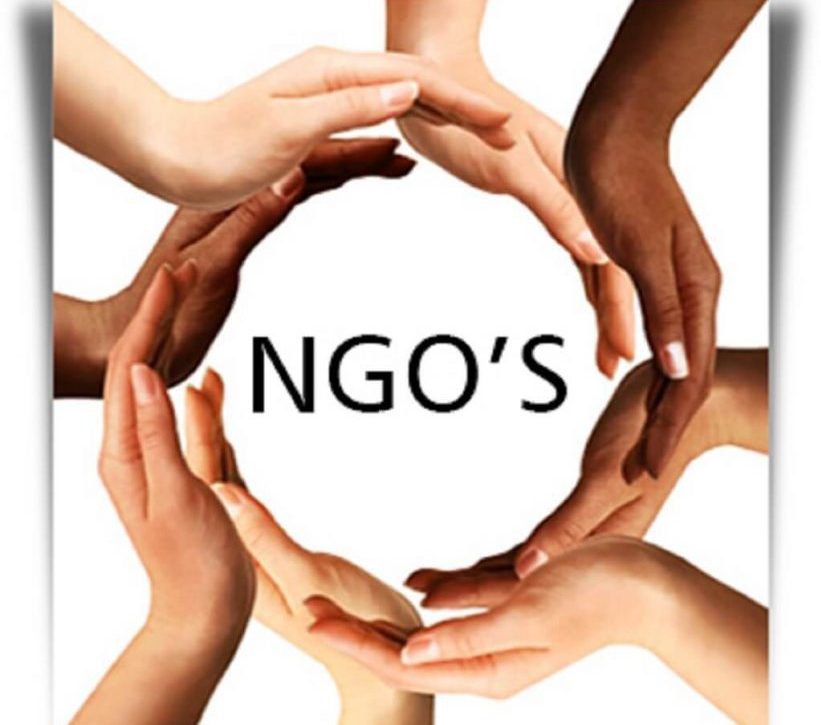
NGO stands for Non-Governmental Organization—a group or initiative that operates independently from the government, often aiming to bring positive social, environmental, or economic change. 🌍
They can be local or international, small or large. Some work on education, others on health, the environment, or human rights. What unites them? The mission to serve, not profit.
💭 Myth #1: NGOs are only about charity.
Reality:
While helping others is at the heart of many NGOs, they’re not just about giving handouts.
Many NGOs focus on empowerment—helping communities build skills, awareness, and systems so they can thrive independently. Think of it like teaching someone to fish instead of just giving a fish. 🎣✨
It’s not about pity—it’s about partnership and progress.
💸 Myth #2: NGOs are always funded by foreign money.
Reality:
While some NGOs do receive international grants, many run on local donations, partnerships, and volunteer support.
There are also grassroots organizations that run entirely on community contributions or small local businesses. It’s not always big money—it’s big heart that keeps the wheels turning. 💛
👔 Myth #3: Working in an NGO means casual or ‘easy’ work.
Reality:
The work is real. The hours are long. And the emotional investment is deep.
From managing field operations to writing grant proposals, organizing campaigns to resolving ground challenges—it’s hard work that demands skills, commitment, and strategy. It might look calm on the surface, but behind the scenes, it’s a storm of dedication. 🌪️
🏢 Myth #4: NGOs are not professional.
Reality:
A modern NGO team may include teachers, lawyers, data analysts, community workers, doctors, and designers—yes, even digital marketers like you! 😉
NGOs today are structured, strategic, and often adopt business-like models when it comes to impact measurement, branding, and innovation. The difference? The focus is purpose, not profit.
👥 Myth #5: NGOs replace government responsibility.
Reality:
Nope! NGOs complement the efforts of the government—they don’t replace them.
They often fill in gaps—like reaching areas where government services don’t fully extend, or supporting the implementation of public schemes with local insight. It’s more of a collaborative ecosystem, not a competition.
🌍 Myth #6: All NGOs are the same.
Reality:
Just like businesses, every Non-Governmental Organization is different. Some work in villages, others in cities. Some focus on disaster relief, others on policy advocacy.
There are organizations that plant trees, build schools, fight trafficking, teach coding, or work in prisons. Their missions may differ—but their impact is real and unique. 🌱💡
💬 Myth #7: One person can’t make a difference through an NGO.
Reality:
Oh, how untrue this is.
Every fundraiser, every volunteer hour, every shared post, every small donation—it all adds up. Sometimes, the smallest actions create the loudest echoes. 🔁
“I just taught kids for 1 hour on Sundays. I didn’t know they’d all go back to school by the end of the year.”
That’s impact.
🔍 So… How Do You Know If an NGO is Genuine?
It’s okay to be curious or cautious. Here’s how to evaluate:
✅ Check their website and transparency in reporting
✅ Look at their fieldwork and community engagement
✅ Ask questions about how funds are used
✅ See if they collaborate with credible partners or volunteers
✅ Trust your instincts and the impact you can observe
Transparency, consistency, and community respect are great signs of authenticity. 🌼
🌟 Final Thought: Purpose Over Perception
NGOs aren’t perfect. They’re made of people—people trying to fix what’s broken, uplift who’s unheard, and challenge what’s unfair. And while they may not always be in the spotlight, their work often lights the way.
So next time you hear the word “NGO,” think beyond the label.
Think of the teacher in the slum classroom.
The girl confidently coding after school.
The woman starting her first micro-business.
The elderly person receiving home care in a forgotten town.
That’s what a Non- Governmental Organization really is: a quiet revolution of hope. ✨
